Have you ever wandered around the makeup counters, tried a few things on your hand and come home without buying anything? Or bought something you were excited about, only to find it sitting unused in your makeup bag a few weeks later?
With so many brands, shades and recommendations, choosing makeup can feel surprisingly difficult. Especially if you haven’t bought much for a while, or the products you used to love no longer feel quite right.
In my makeup lessons in Harrogate, choosing products is often just as much a part of our conversation as applying them. Knowing what suits you, and understanding why, makes shopping much easier.
Start with a question, rather than a shopping list
Before buying anything, think about what you’d actually like help with. Perhaps your foundation feels too heavy. You’d like a little more colour in your face, but you’re unsure about blusher. Or you own several eye palettes and still reach for the same shade every morning.
Try to put the question into words: “I’d like a base that looks more natural,” or “I want to define my eyes without making them look too dark.” That gives you something useful to look for when browsing. It also makes it easier to explain what you need when asking for advice.
Look through your own makeup bag first
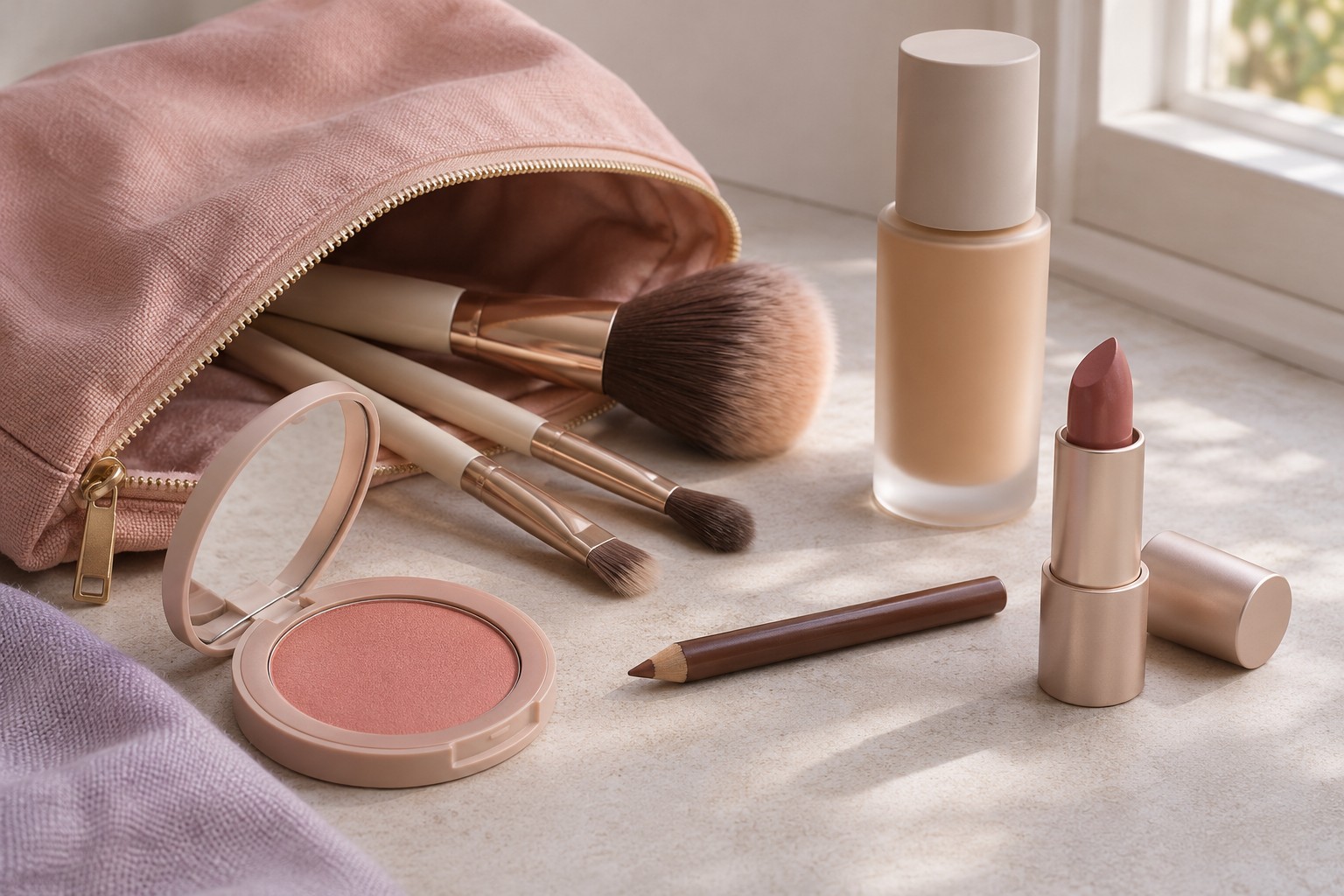
You may already own more useful products than you realise. When a client brings her makeup bag to a lesson, we look at what she uses, what she avoids and what she’s unsure about. Sometimes a product suits her beautifully, but she hasn’t found an application method she enjoys.
A different brush, a smaller amount or a change in placement might make it easier to use. Other times, something different would be helpful. The point is to understand what’s missing before adding more.
If you’re starting from scratch, that’s fine too. You can build a small collection around the makeup you actually want to wear.
You can choose from different brands
It’s easy to keep returning to a familiar counter. You know the name, recognise the packaging and feel comfortable asking about the range. But your foundation, blusher and mascara don’t all need to come from the same brand or sit at the same price point.
One of my clients recently told me how much she’d enjoyed exploring makeup counters after her lesson. She began by looking at familiar brands, then widened her search and found a blusher she was excited to try. What pleased me was that she felt able to explore and make a decision for herself.
My recommendations draw on different brands, chosen around your skin, preferences and budget. I don’t earn commission from your product purchases.
Give yourself time to check colours
Shop lighting can make it difficult to judge a colour. A swatch on your hand can help you explore texture and compare shades, but it won’t tell you everything about how a product will look on your face.
For foundation, I suggest checking a small amount around your lower face and jawline, considering how it sits alongside your neck. Look at it in natural daylight where possible, and ask for a sample if one is available.
With cheek and lip colours, think about the effect you want. Do you prefer a subtle hint of colour, or something more noticeable? Would you enjoy applying and wearing it on an ordinary day? You can take your time. You don’t have to decide at the counter.
Consider the brush as well as the product
A lovely product can be frustrating if you’re using a tool that makes it difficult to control. During lessons, we look at brushes alongside the makeup. I’ll explain which ones are useful for your routine and how to use them.
You may need fewer than you expect. A handful of brushes you understand can be much more helpful than a large set with no clear purpose. Before replacing a product you struggle with, it’s worth checking how you’re applying it.
Buy gradually and practise
You don’t need to buy every recommendation at once. Start with the changes that would be most useful to you. Spend some time using them, then decide whether you need anything else.
Set up somewhere comfortable, with natural light in front of you and a mirror you can bring closer for detail work. Give yourself a little time to experiment when you’re not rushing out.
That practice helps you discover your own preferences: how much coverage feels comfortable, how much blusher you enjoy and which steps make the biggest difference to you. If questions come up, make a note of them. They’re useful things to bring to a consultation or a follow-up lesson.
Get personal help choosing your makeup
If you’d like someone to go through your products and questions with you, my online makeup consultation is a practical place to start.
We can review your makeup bag, discuss colours and products, and identify useful changes for your routine and budget. Afterwards, I’ll send your personalised recommendations and shopping links, so you have something to refer back to. You can join from anywhere in the UK.
If you’d also like to practise applying your makeup with me beside you, explore my makeup lessons in Harrogate. We can work through the products and techniques together, at your pace.
You don’t need to buy anything before we meet. Bring what you have, along with the questions you’ve been wanting to ask.
Mel x
A THOUGHTFUL CHRISTMAS GIFT
Give her time to focus on herself this Christmas
A personal makeup lesson can be a lovely present for someone who’s mentioned wanting a refresh, or something to put on your own wish list. Choose a private lesson or enjoy learning together at a shared session.
Gift vouchers are personalised and emailed, ready to print or send.